
Meet the Team: Augustine Chipungu
|
|
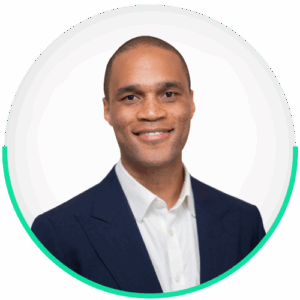
In the latest edition of JPES Partners’ “Meet the Team” series, we speak to our Director, Augustine Chipungu.
- How and why did you decide to go into communications?
It’s a somewhat unusual story. I had always been fascinated by the City of London, but at the same time found it rather nebulous as a profession to break into.
However, while working for a think tank, we were sent to a reception in the City with the aim of charming people of means into donating to our research.
In the process of trying to do so, however, I inadvertently managed to charm two individuals in particular, into suggesting that I should not only consider a career in corporate and financial communications, as they thought I would be a good fit, but that I should also come in for an interview for a role they had available.
The rest, as they say, is history.
- Describe your working pattern over the course of an average week and how you find a work-life balance.
One thing I would say about my working week, which is probably what I love most about my role, is no two weeks are ever completely identical.
In terms of working patterns however, the first thing I like to do when I wake up is turn on the Today Programme, and check what is on the front page of all the newspapers via the BBC or Sky News website to get a sense of where the news agenda is, and how I may be able to plug my clients in. I then peruse my calendar and inbox to work out what my day or week will be looking like, usually on my commute in, so that when I sit down at my desk, I have a sense of what I order my priorities should sit in.
I can’t say I have quite figured out a formula for achieving a work/life balance, as ultimately clients come first. However, this summer, my partner and I did the transatlantic crossing from Southampton to New York and we vowed not to connect to the onboard WiFi (not least because it was $45/day!), and it was genuinely the most refreshing thing to be totally off grid for 8 days.
- What areas or trends interests you the most at this time?
This sounds somewhat clichéd, but I am genuinely fascinated by the AI hyperscalers trend and the sheer scale of infrastructure required to support it.
In particular, I’m interested in how the manufacturers of memory chips, semiconductors and other critical components will keep pace with what appears to be an insatiable demand for computing power.
Beyond the technology itself, I find the broader investment implications compelling, especially the race to build the physical backbone of AI and the opportunities it creates across the entire supply chain.
- What do you do in your spare time?
Outside of my professional commitments, I harbour a deep-seated passion for politics and active civic engagement, devoting much of my spare time to campaigning in both local and general elections.
My involvement spans a diverse array of strategic initiatives, ranging from community-level data collection and direct voter canvassing to targeted leaflet distribution and fundraising efforts.
Additionally, I actively engage with broader political discourse by participating in think-tank forums and policy discussions, which allows me to contribute meaningfully to the electoral process from both a logistical and conceptual standpoint.
- Tell us about the last book you read or the last podcast you listened to?
The last podcast I listened to was Anthony Scaramucci’s interview with Rory Stewart and Alastair Campbell about his new book, All the Wrong Moves. The book examines the roots of America’s current political crisis and argues that a series of bipartisan policy mistakes helped pave the way for the rise of Donald Trump and modern populism.
The Mooch, as he’s widely known, isn’t usually my go-to political commentator, having managed to call most major political events of the past decade incorrectly. Still, the podcast was an entertaining listen, and perhaps he’s better at analysing the past than predicting the future.
The last book I read was The Iliad by Homer. Inspired by the recent buzz around Christopher Nolan’s adaptation of The Odyssey, I decided to have a go both epics. The Iliad, which centres on the conflict between Achilles and Hector during the final year of the Trojan War, is certainly not the easiest read – the translator’s introduction alone ran to 55 pages, which felt like a challenge in itself before the story had even begun.
- Name one goal, professional or personal, you have set yourself for the next 12 months
To be fluent in Spanish!
Recent insights

Video/Podcasts

Blog

Reports